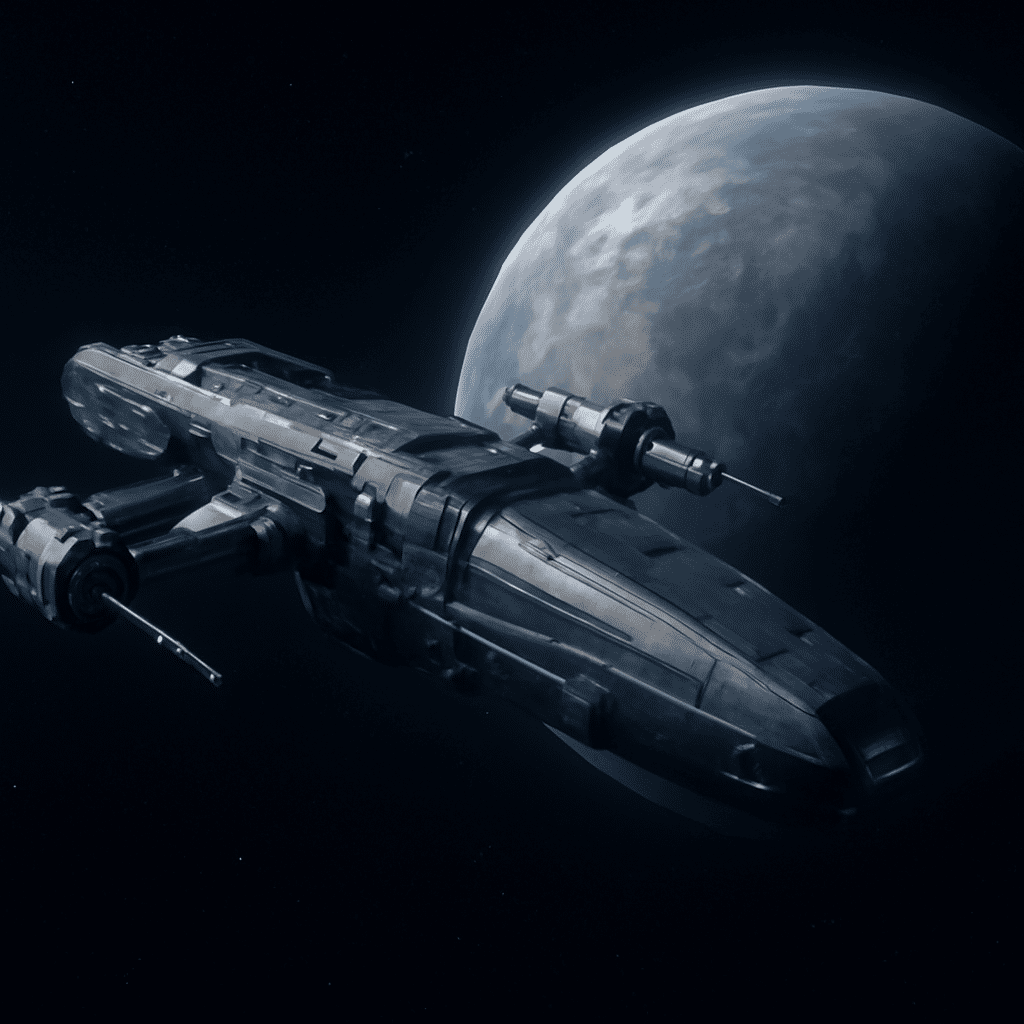
Artificial intelligence (AI) has become a pivotal force in the evolution of space exploration, revolutionizing how humans explore the cosmos and unlocking mysteries of the solar system once deemed impossible. With its ability to rapidly process data, learn from vast datasets, and perform complex tasks autonomously, AI is reshaping scientific endeavors, leading to groundbreaking discoveries and enhancing mission efficiency.
One of the most significant ways AI contributes to space exploration is through data management and analysis. Space missions generate colossal amounts of data, captured by various sensors aboard spacecraft, landers, and rovers. Processing and analyzing this data manually would be an insurmountable challenge. AI algorithms, capable of identifying patterns and anomalies, allow scientists to delve deep into diverse datasets to uncover valuable insights. This capability is exemplified by AI's role in the analysis of data from the Kepler Space Telescope, where machine learning techniques have helped identify possible exoplanets.
Autonomous navigation presents another area where AI thrives. Space missions often involve long travel distances across the solar system, with spacecraft requiring the ability to navigate vast expanses with minimal human intervention. This autonomy is particularly crucial for rovers exploring planetary surfaces, such as Mars. The Mars rovers, including the latest Perseverance rover, are equipped with AI-driven systems that enable them to make real-time decisions regarding terrain navigation, obstacle avoidance, and target selection, thereby ensuring the success of exploratory activities.
In addition to navigation, AI's utility extends to predictive maintenance, which is essential for the longevity and success of space missions. Given the remote and inaccessible nature of space instruments, traditional maintenance is impractical. AI systems deployed onboard spacecraft can predict potential equipment failures, perform diagnostic assessments, and even suggest corrective measures, significantly reducing the risk of mission failure due to unforeseen malfunctions.
AI's capacity to simulate and model complex scenarios contributes to mission planning and design. Before the launch of any mission, detailed simulations are performed to anticipate and plan for various mission stages. AI-driven simulations can account for the myriad variables and contingencies of space travel, providing mission planners with the information needed to make informed decisions. This not only aids in designing more efficient missions but also elevates the potential for scientific advancement by ensuring unpreparedness for a range of possible scenarios.
In the realm of discovery, AI is instrumental in the interpretation of imaging data, advancing the study of celestial bodies. Cutting-edge algorithms are employed to process high-resolution images from probes, uncovering geological formations, mineral compositions, and potentially habitability indicators on planets and moons. This enables astronomers and planetary scientists to construct more accurate models of past and present conditions in different parts of our solar system.
Furthermore, AI paves the path for future space missions that may focus on astrobiology and the search for extraterrestrial life. AI's advanced pattern-recognition capabilities allow it to scrutinize data for biosignatures or trace elements indicative of potential extraterrestrial biology. This could play a crucial role when exploring promising environments such as the subsurface oceans of Europa or the methane lakes of Titan, offering insights into whether life exists beyond Earth.
In conclusion, AI technology is fundamentally transforming space exploration, enhancing our ability to conduct inquiries in regions previously beyond reach. By managing data, enabling autonomous spacecraft operations, ensuring mission longevity, and simulating complex scenarios, AI is an indispensable tool for driving the next wave of discoveries in our solar system. As technology continues to advance, it is certain that AI will push the boundaries of what is possible, making the cosmos a little less mysterious and a whole lot more exciting.